
Reading wind from damage
What fell, which way it fell, and why the same fallen tree means two different wind speeds depending on the ground it stood in.
The scale rates damage, not wind
The Enhanced Fujita scaleThe scale that estimates wind speed backwards from damage, using 28 damage indicators each with its own degrees of damage. It rates damage; it does not measure wind., operational since 1 February 2007, works through 28 One of the 28 kinds of structure or vegetation the EF scale reasons from, such as a one- or two-family residence or a hardwood tree. Each carries a ladder of damage degrees., each with degrees of damage and, for each degree, an expected wind speed with a lower and upper bound. It is a way of reasoning backwards from what broke to what the wind probably was, and it produces a range.
Two of the 28 matter most for straight-line wind: hardwood trees and softwood trees. Each runs the same ladder of degrees, from small limbs breaking, through large branches, through trees uprooted, through trunks snapped, to trees debarked with only stubs of the largest branches left standing.
The same tree, two answers
This is the part that changes what a spotter in a wet climate should say, and it comes straight from the scale's own notes: when uprooting happens in saturated ground or very shallow soil, move toward the lower bound. The tree came out at a lower wind speed than the expected value implies.
- Species and rooting matter. Deep-rooted mature hardwoods push toward the upper bound. Shallow-rooted or badly planted urban trees fail early and push toward the lower.
- Leaves matter. A bare tree in winter presents far less to the wind, so the same damage means a higher speed.
- Health matters. A rotten trunk tells you about the trunk.
Which way did it fall
The single most useful thing a spotter can add, and it needs no instrument: the pattern.
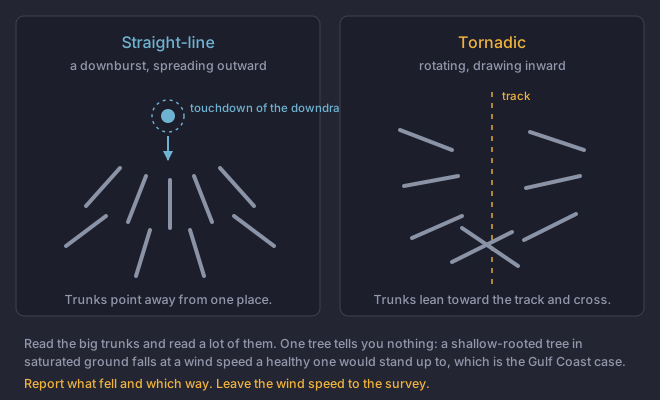
Surveyors take direction from large uprooted trunks, not from small snapped branches, which fall whichever way they were already leaning and are unreliable. One tree is an anecdote. A dozen is a pattern.
How to describe damage so it is usable
Precision here is worth more than a wind speed, because it lets somebody else do the estimating properly.
- Trees and limbs: diameter in inches, and how many. "Three limbs, four to six inches" is a data point. "Big branches down" is not.
- Trees down: whether snapped or uprooted, roughly what fraction of the trees present, and the ground condition.
- Structures: the type, because it decides everything. A site-built house, a mobile home, a shed and a barn fail at very different speeds. Then what failed: shingles, roof decking, walls.
- Power lines: down, and whether poles snapped or leaned.
- The direction things fell, if you can see a pattern.
After three days of rain, several mature trees are uprooted in a fan pattern spreading outward from one area. How should the wind speed be characterised?
The scale's own notes say which way to move when the ground is saturated.Saturated or very shallow soil moves the estimate toward the lower bound: the tree came out more easily, so the same damage implies less wind. This is the caveat most likely to be inverted, and in a wet climate it applies most of the time. The fan pattern, separately, says straight-line rather than tornadic.