 Challenge the exam
You already know what you're looking at. Get credit for it.
Chaser reports get dismissed because nobody can tell the legit cases from the noise. WxAlerts certification is the difference: pass one honest assessment and your reports publish with your name on them, checked against live radar, weighted by the track record that follows you.
Never done any of this? Start from the beginning The exam opens shortly. The coursework is open now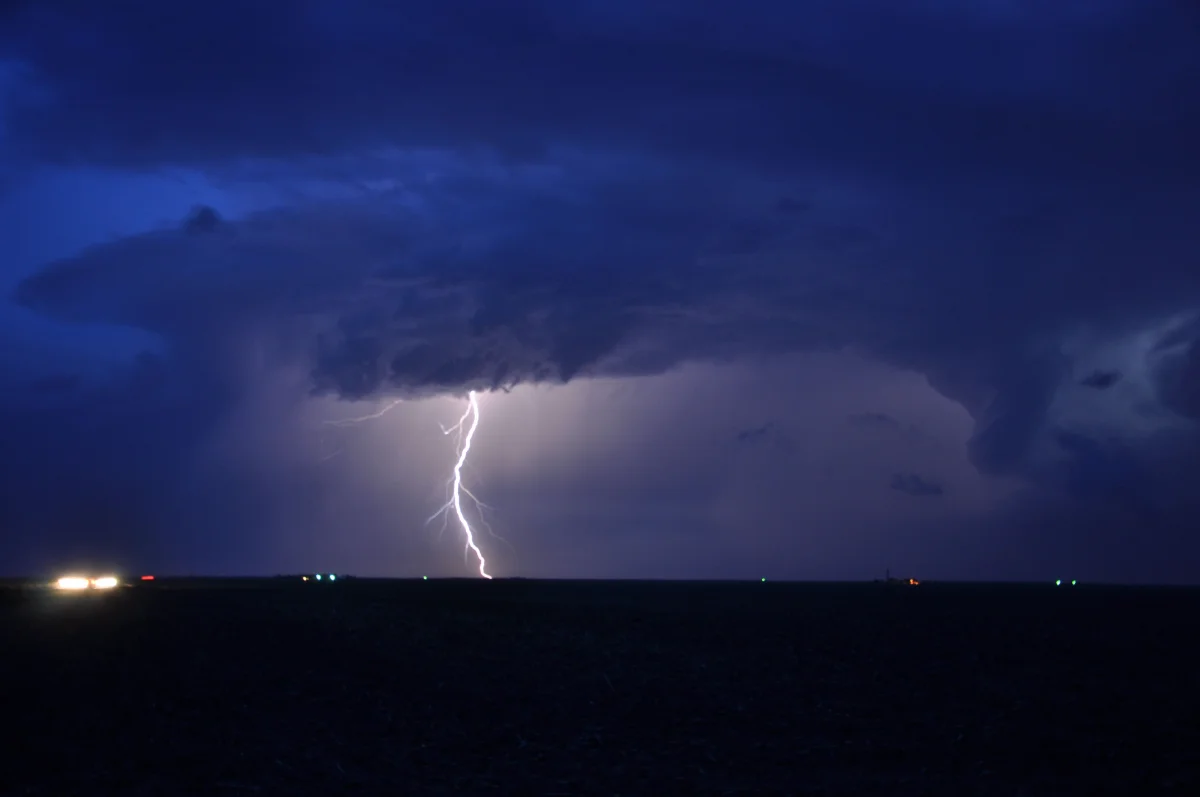
In plain English, before any of the jargon.
The rest of this page is written for people who have been doing this for years. This part is not. If you have never reported weather in your life, read these four and then open the first lesson: that is the whole on-ramp.
Somebody who says what they can actually see
Not a meteorologist and not a forecaster. A person on the ground who looks at a storm and reports concrete things: hail on the driveway, a tree across the road, water where the road should be, a funnel over the field. That is the job, and it is smaller than it sounds.
Radar is looking over your head
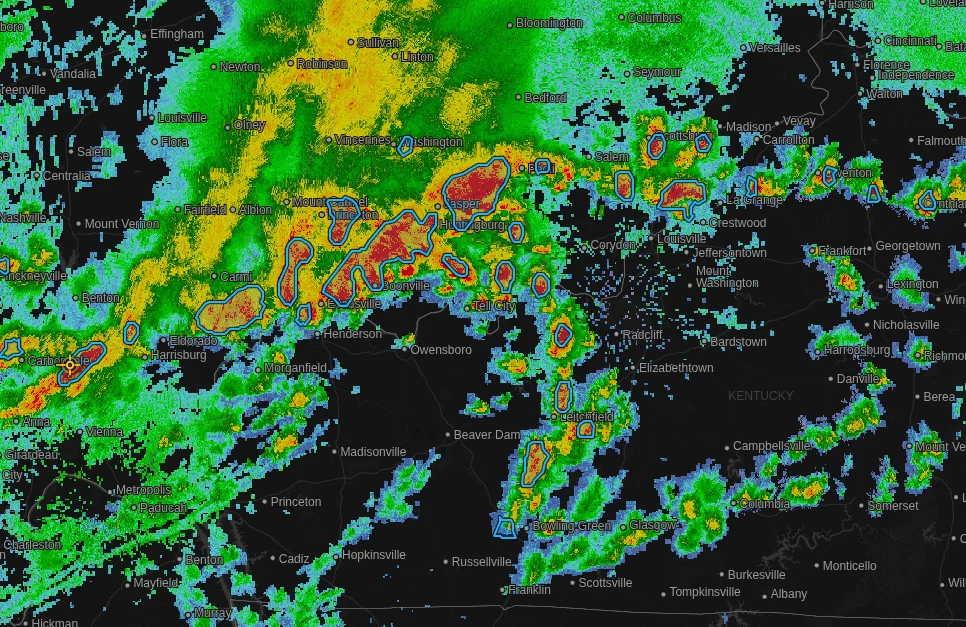
Weather radar sees a slice of the storm thousands of feet up, and the further you stand from the antenna the higher that slice sits. It cannot see the stone that just hit your car or the water crossing your street. Somebody standing there can, and that gap is the reason the spotter network exists at all.
A test that you can read a sky and word a report
Pass it and the reports you file here publish with your name on them instead of landing in an anonymous pile. It is a WxAlerts credential: free, ours, and not an NWS or SKYWARN badge, because only a National Weather Service forecast office can grant one of those.
Nothing, and you can read all of it without an account
Every written module is open right now to anybody with a browser. Read as much as you want before deciding whether to sign up for anything, and certification itself stays free for spotters.
Begin with lesson one: What radar can't see
30 minutes, free, no account. It is the lesson that explains why a person standing under a storm is worth anything to a forecaster, and the rest of the course follows from it.The words on this page, in one line eachOpen this first and the rest of the page reads.
- Spotter
- A person reporting what a storm is doing where they are standing.
- Chaser
- Somebody who drives to storms on purpose. You do not have to be one to do any of this.
- Ground truth
- What actually happened at the surface, as opposed to what radar inferred. It is the thing a spotter supplies.
- Supercell
- A thunderstorm with one rotating updraft that can last hours. The kind behind most strong tornadoes and the biggest hail.
- Wall cloud
- A lowering hanging under the part of a storm that is drawing air in. One that rotates is worth reporting.
- Shelf cloud
- The low wedge on the leading edge of a storm. It looks alarming and means wind, not rotation.
- Scud
- Ragged low cloud drifting near a storm. It does not rotate, and it is the thing most often mistaken for a funnel.
- QLCS
- A long line of storms rather than one separate cell. Its tornadoes are brief and give almost no warning.
- Reflectivity and velocity
- The two radar pictures: how much is falling, and how fast it is moving toward or away from the radar. Rotation shows up in the second one.
- MESH
- Radar guessing the biggest hail in a storm. It is a guess about hail up in the cloud, which is why somebody measuring a stone on the ground still matters.
- SKYWARN
- The National Weather Service's own volunteer spotter programme. It is separate from this site, and only a forecast office can make you SKYWARN-trained.
Inside a lesson you do not need this list. Every term is defined where it appears: hover it, or tap it on a phone.
Six things you don't get from an uncertified spotter.
Certification is a key, and it's the key that stands you apart from the rest of the crowd.
Your reports publish with your name on them
No anonymity here. A certified report on the WxAlerts live map carries your handle, your location, and your accuracy record: a public body of work built from your own seasons.
Radar backs you up instead of second-guessing you
Every report is checked for plausibility against live reflectivity, MESH and rotation tracks, then published with a confidence tier. When the signature matches what you called, the data says so on the record.
A human under the storm outranks the algorithm
We score confidence; we never delete your report because a product disagreed. MESH underestimates hail all the time. We know that, and the system puts trust in your judgment - its only attempting to match.
Accuracy you can actually point to
Your validation history is visible: every report, what radar showed, how it scored. That is a portfolio: for EOCs, for media, for NWS.. anyone who asks why they should believe you.
Consistency gets you elevated
You've been doing this long enough, but does the public know? With a certification you can show it. With WxAlerts you can prove it. With consistent strong validation, the people who make the judment calls will look at you first.
You stop being lumped in with the noise
The reason offices distrust chaser reports is that they cannot separate careful from careless. A hard credential does that separating for you, in public.
Because the last badge you earned didn't mean anything.
You've seen networks where the test answers circulate freely and anyone with a browser is suddenly a "trained" spotter on their network. That's exactly why forecast offices have started publicly rejecting chaser reports, and why a badge that's hard to get is worth having.
It respects the seasons you already put in
If you've been out here long enough, a lot of the course material is old-hat. And we respect that! Sit the exam, skip the seat time, and be certified in an afternoon. If you want the continuing education feel free to take a few of the courses. Either way; It's free!
A badge is only worth what it costs to fake
When answers to a spotter test circulate online, the badge stops meaning anything and everyone wearing it gets discounted. Large rotating item pools, a fresh set on every attempt, and an answer key nobody outside the exam can reach are what keep yours worth wearing.
Photographs are the honest test
A sky is not a flashcard. As the image bank comes in, the exam leans harder on telling one cloud from another in a real photograph, because that is the one thing worth saying about a spotter: this person can read a sky like the back of their hand.
It makes you better at the calls you already make
Hail sizes based around coin references. Gust estimates based on a wet finger in the air (or they may as well be..). Roughly 45% of tornadoes never get reported at all, and reports thin out fast further from towns. Knowing where the bias lives changes how you word a report, and that is the difference between a call a forecaster uses and one they set aside.
One afternoon to certified, if you already know your stuff.
The exam isn't easy, but thats the point right?
Text questions leak, so this one is built to lean on photographs: wall cloud or shelf cloud, rotation or scud, reportable or not given the time and place, how big is that stone against the object beside it. Those items are written and waiting on their pictures, so the first papers come from the ones that stand on their own: forty questions, a different set every attempt, drawn across all eleven modules. Nobody is going to pass this from a forum thread, which is the entire point of you passing it.
- Passing standard
- 80%
- Time limit
- Generous but finite, about 90 min
- Attempts
- 3 a year, with a 48-hour wait between
- Question pool
- ~600 questions
- What each attempt draws
- A fresh set, weighted across all 11 modules
- Staying certified
- Annual CE, or 4 of 6 scenarios
- Cost
- $0.00
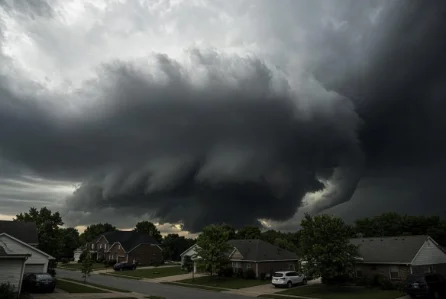
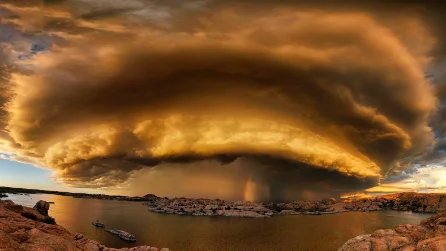
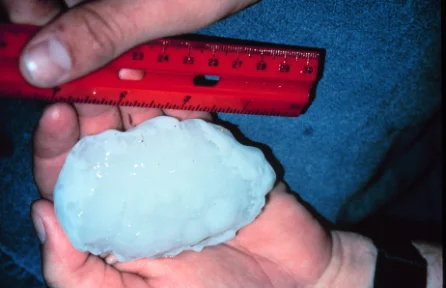
Eleven modules that will teach even an experienced chaser something.
Not a forty-minute slideshow. Rotation cues get 9 lessons and radar artifacts 10, and using the correct tools (like an actual anemometer for wind gusts - put the wet finger away..) is the stuff that makes your calls land better.
New to it? Take them top to bottom. Module one assumes nothing at all, each module builds on the one above it, and if the summaries below read like a foreign language that is exactly what the modules are for.
The numbers that make a report usable
Aligned to NWS severe weather reporting criteriaSix real events a year, and your own accuracy in writing.
Every two months you get an archived event to work cold: the radar loop, a spotter's-eye photo, a place and a time. You make the call, then see what was actually reported, what the office did with it, and what verification found. It's the feedback loop chasing almost never gives you.
Pass four of the six scenarios in a year and your annual recertification is a short refresher instead of the full exam.
The things people ask first.
Mostly from people who assumed this was not for them. If yours is not here, ask on Discord or through support.
I have never reported weather in my life. Is this for me?
Yes. The course is written from nothing: module one explains what a warning is, who issues it, and where a report from the ground fits into that. The pitch at the top of this page is aimed at people who have chased for years, because they are the ones who usually assume a course has nothing for them. Starting from zero is the easier case, not the harder one.
Do I have to chase storms?
No, and it is worth being clear about that. Spotting is reporting what you can see from where you are, which for most people is a house, a yard, a workplace or a road they were already on. Chasing is a separate hobby with its own risks. The course covers safety and positioning in its own module precisely so that the answer to "should I get closer" is usually no.
Do I need equipment?
Not to start, and not to read any of this. A phone gets you a camera, a location and a way to file a report. The lessons on hail and wind are specific about the handful of things that measurably improve a report, like a ruler for hail and an actual anemometer rather than an estimate, and equally specific about what is not worth your money.
Is this an official National Weather Service certification?
No. WxAlerts training is independently developed and is not affiliated with or endorsed by NOAA or the National Weather Service. The content is aligned to NWS severe weather reporting criteria and built on public-domain federal source material, but the credential is an internal WxAlerts one that lets you submit reports here. Only a National Weather Service forecast office can make somebody NWS- or SKYWARN-trained, and many people end up doing both.
Is it actually free?
Yes. The modules are free to read with no account at all, and certification costs spotters nothing. An account exists so your progress is saved per lesson and so a report can carry your name, not to charge you.
What if I fail the exam?
You sit it again. The standard is 80%, you get 3 attempts a year with a 48-hour wait between them, and every attempt draws a fresh set of questions. Nothing you read stays unread, so a failed attempt costs you two days and nothing else.
Can I sit the exam today?
Not yet. The exam is being finished and this page says so wherever it asks you to sit one. The coursework is open now, free, and none of it is wasted: the exam draws from exactly these eleven modules when it opens.
Challenge the exam
Attended an NWS spotter class, or ten seasons in the field? Skip the coursework entirely. Same items, same 80% standard, no seat time. One exam and you are certified.
Go straight to the exam New here, or coming back to itStart at lesson one
Eleven modules at your own pace, starting from what a warning is and who issues it. No account needed to read them, and the exam is open to you whether or not you finish. Free, and genuinely more depth than any spotter class you have attended.
Open the first lessonWxAlerts training is independently developed and is not affiliated with, endorsed by, or operated by NOAA or the National Weather Service. Course content is aligned to NWS severe weather reporting criteria and built on public-domain federal source material. Certification is an internal WxAlerts competence requirement for report submission. It is not accredited, carries no academic credit, and does not confer NWS- or SKYWARN-trained status, which only a National Weather Service forecast office can grant.